Section 3 of 9
Making wines
Chapter 1 gave you the equation. This chapter walks through how that equation is used to make three different colours of still wine. You will see where white, red, and rosé production diverge, why the grape skins are the whole story, and what happens between fermentation and bottling. The production of sparkling and fortified wines is not assessed at Level 1; those belong to Level 2.
By the end of this chapter you will be able to:
- Describe the stages of white, red, and rosé wine production in order.
- Explain why the handling of the skins determines the colour of the finished wine.
- Identify the two common vessels used for fermentation and maturation.
- Explain why black grapes can still be used to make white wine.
The stage everyone shares
All three colours begin the same way. Grapes are picked, then crushed to release juice. From that moment on, the winemaker makes a single decision that defines the colour of the finished wine: whether the skins stay with the juice during fermentation.
Making white wine
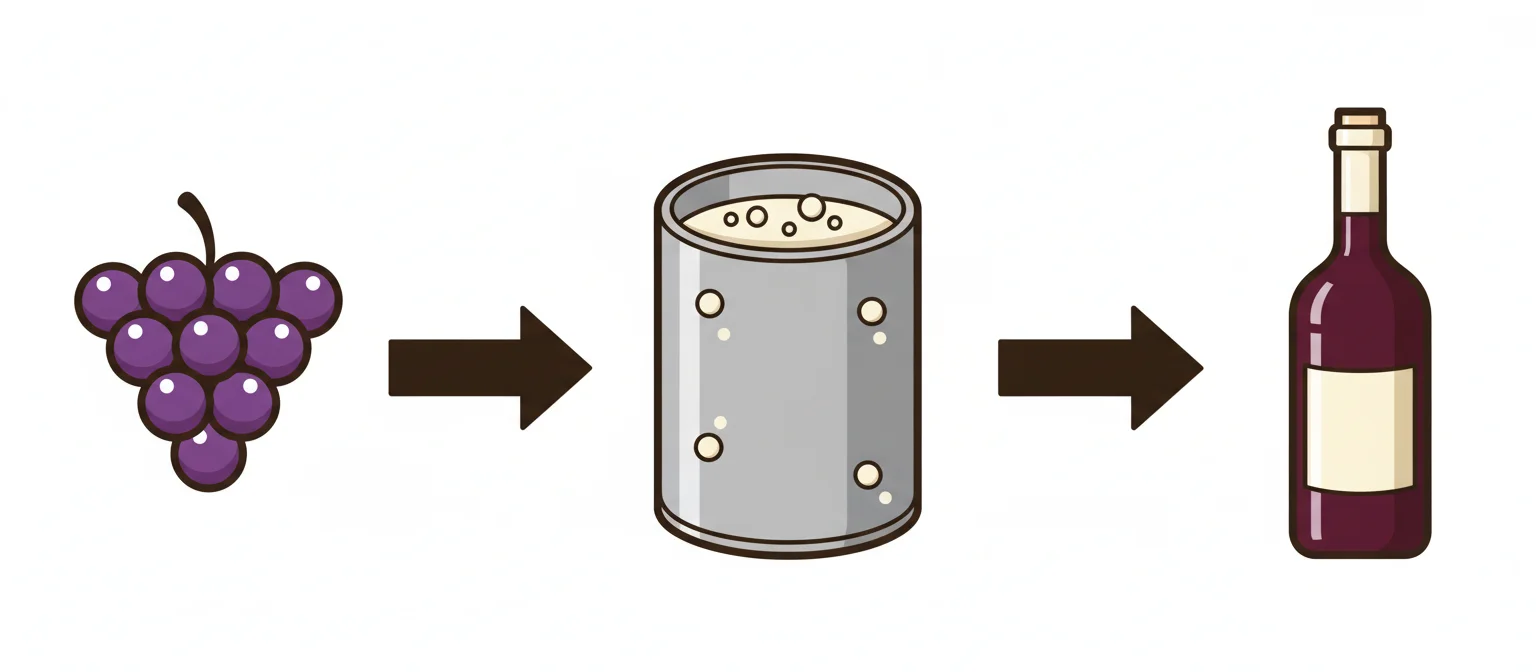
For white wine, skins are removed early so they cannot transfer pigment or tannin to the juice. The process runs in this order:
- Crushing. White grapes are crushed to release some of the juice.
- Pressing. The crushed grapes are pressed to extract the rest of the juice. The skins are removed.
- Fermentation. Yeast is added to the juice. Fermentation takes place in stainless steel tanks or oak barrels.
- Maturation. After fermentation, the wine is stored in stainless steel tanks or oak barrels to develop.
- Bottling.
Making red wine
For red wine, the skins stay with the juice during fermentation so their pigment and tannin transfer into the liquid.
- Crushing. Black grapes are crushed. Juice and skins go into the fermentation vessel together.
- Fermentation. Yeast is added to the mixture of juice and skins. The juice and skins are mixed thoroughly throughout fermentation: this is what extracts colour and tannin from the skins into the wine.
- Draining. Once fermentation is finished, the wine is drained off the skins.
- Pressing. The remaining skins are pressed to release any last wine.
- Maturation. The wine matures in stainless steel tanks or oak barrels.
- Bottling.
Making rosé wine
Rosé sits between the two. Black grapes are used, but the skins only stay with the juice for a few hours, long enough to tint it pink but not long enough to turn it red.
- Crushing. Black grapes are crushed and added to the fermentation vessel with their skins.
- Short skin contact. After only a few hours, the juice is drained from the skins. At this point the juice is pink.
- Fermentation. Fermentation finishes without the skins.
- Maturation. Stored in stainless steel. Rosé is rarely matured in oak.
- Bottling.
Black grapes in white wine
Here is a fact the exam likes to ask in a trick form. Black grapes can be used to make white wine. The skins of black grapes are coloured, but the juice inside them is not. If the grapes are gently pressed before fermentation so no colour transfers, the juice is suitable for white wine production.
Tanks and barrels
- Stainless steel tank
- Neutral. Preserves the fresh fruit character of the grapes. Used for any colour of wine.
- Oak barrel
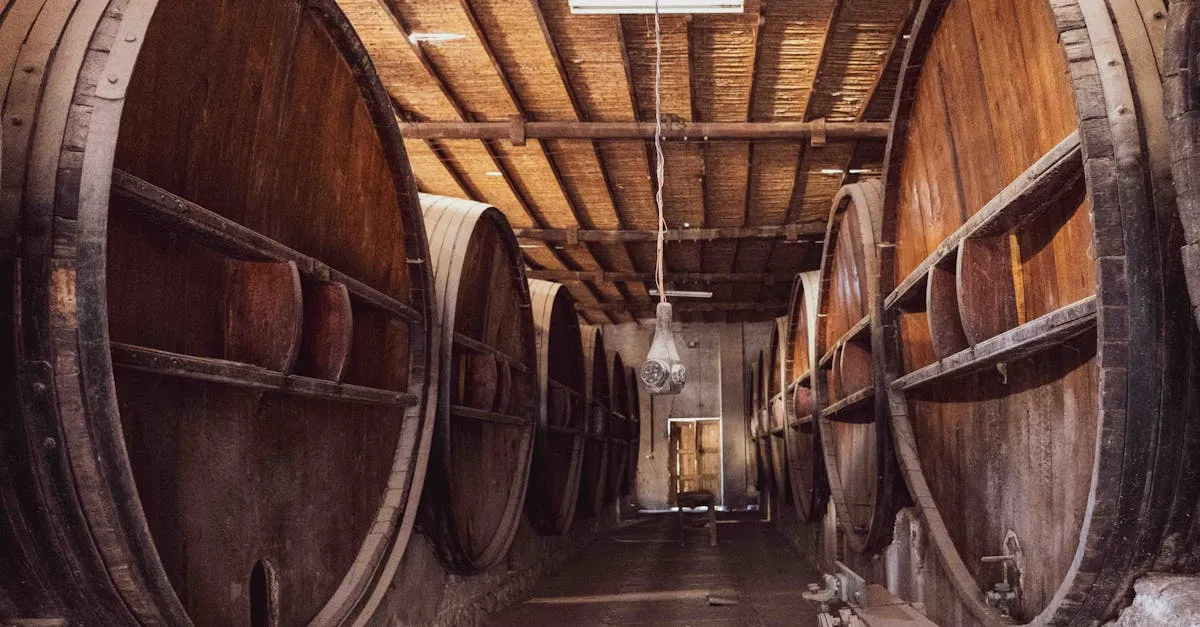
- Adds flavour and structure to the wine during fermentation or maturation. More common for red and for some whites. Rarely used for rosé.
Chapter summary
- All still wines begin with picking and crushing.
- White wine: skins removed before fermentation.
- Red wine: skins remain during fermentation, drained off afterwards. Colour and tannin come from the skins.
- Rosé wine: skins stay for a few hours only, then are drained. Rarely matured in oak.
- Black grapes can make white wine if pressed gently before fermentation to avoid skin colour transfer.
- Fermentation and maturation take place in stainless steel tanks or oak barrels.
The three colours you met here are three versions of the same process, separated by a single decision about skins. Run the Making Wines deck now, then continue to Chapter 4 to see how these still wines compare to sparkling and fortified styles.
✓
Test yourself to continue
Making wines