Section 7 of 9
Storage and service
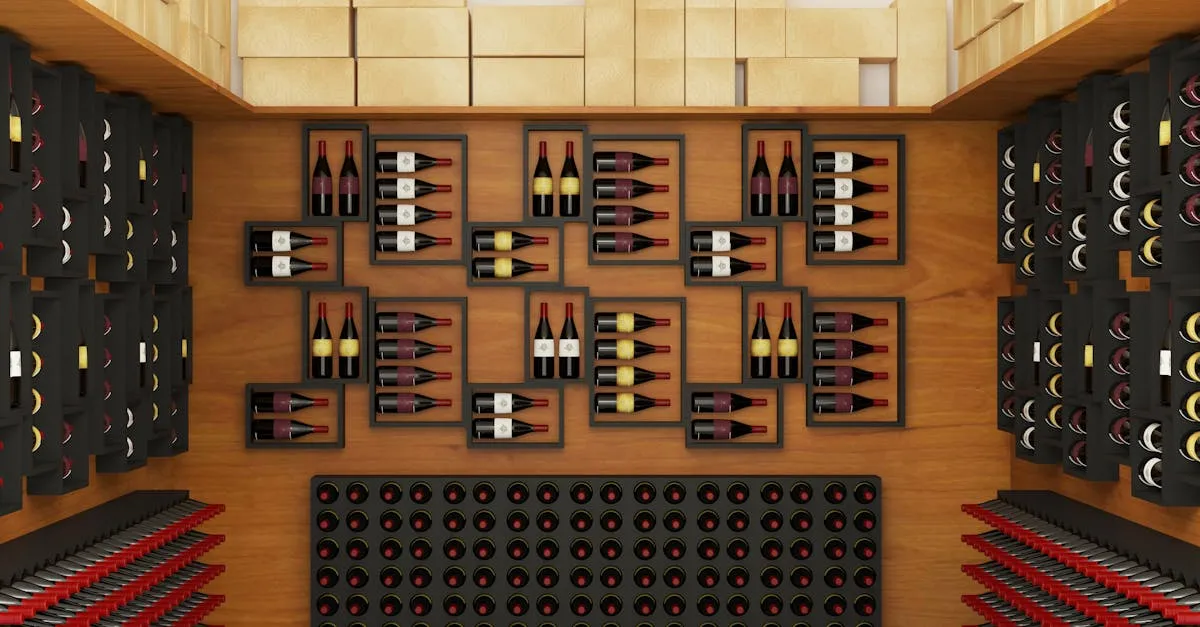
Wine is shaped by every choice between vineyard and glass, including how it is stored, opened, and served. This chapter covers the three storage rules, the serving temperatures by style, the role of the glass, how to open still and sparkling bottles safely, and how to keep an opened bottle fresh.
By the end of this chapter you will be able to:
- State the three rules for long-term wine storage.
- Recall the recommended serving temperatures for each style of wine.
- Explain why good wine glasses narrow at the rim.
- Describe safe technique for opening still and sparkling wines.
- Name two systems for keeping an opened bottle fresh.
Storing wine
Three rules, all for the same reason: heat, light, and air all damage the fruit character of a wine.
- Cool and constant temperature. Extremes and fluctuations both damage the wine.
- Away from strong light. Sunshine and bright artificial light generate heat and strip the fruit character.
- On its side if sealed with a cork. This keeps the cork moist. A dry cork shrinks and lets air in. Screwcap bottles can be stored standing up.
Service temperature
Whites, rosés, and sparkling wines are served chilled. Reds are served at room temperature or lightly chilled. Use the table as a default; if a guest prefers their wine warmer or colder, that is their call.
White, rosé, and sparkling
- Sweet wines (e.g. Sauternes)
- Well chilled. 6 to 8°C (43 to 45°F).
- Sparkling wines (e.g. Champagne)
- Well chilled. 6 to 10°C (43 to 50°F).
- Light and medium-bodied white and rosé (e.g. Pinot Grigio)
- Chilled. 7 to 10°C (45 to 50°F).
- Full-bodied white (e.g. oaked Chardonnay)
- Lightly chilled. 10 to 13°C (50 to 55°F).
Red
- Medium and full-bodied red (e.g. Shiraz)
- Room temperature. 15 to 18°C (59 to 64°F).
- Light-bodied red (e.g. Beaujolais)
- Lightly chilled. 13°C (55°F).
Using an ice bucket properly
Fill the bucket with cold water as well as ice. Ice alone is less efficient at chilling a bottle because it does not make full contact with the glass. Never heat a wine on a radiator to warm it up: heat damages flavour. Put the bottle in the serving room and let the temperature rise naturally.
Glassware
There are hundreds of glass designs. The best share one feature: the bowl narrows at the rim so the aromas of the wine are concentrated inside the glass. Red wine glasses are typically slightly larger than white wine glasses. Sparkling wine is served in flutes.
Clean glassware matters too. Dirt or residue from detergent can spoil the wine. Polish glasses before use to remove lingering marks.
Opening a bottle of still wine
This process only applies to cork-sealed bottles. Screwcap bottles just need a twist.
- Remove the top of the capsule. Use a capsule remover or a waiter's friend corkscrew. Clean the neck of the bottle with a cloth.
- Centre the corkscrew in the middle of the cork. Screw it in and draw the cork out gently.
- Wipe around the inside and outside of the neck with a cloth before pouring.
Opening a bottle of sparkling wine
Sparkling wine is under pressure. Chilling reduces that pressure but does not eliminate it. A flying cork can injure someone.
- Remove the foil. Loosen the wire cage. From the moment the cage is loose, keep your hand over the cork.
- Hold the bottle at an angle. Grip the cork with one hand and the base of the bottle with the other.
- Turn the bottle, not the cork. Hold the cork firmly so the pressure does not force it out too quickly.
- Release the cork gradually. Done well, the bottle opens with a quiet phut, not a bang, and no wine is lost.
Serving wine
Before pouring, check three things:
- The appearance. Haziness can indicate a fault.
- Whether there are any floating bits.
- The aroma. The wine should not smell stale, of wet cardboard, or of vinegar. Any of those is a fault.
Keeping an opened bottle fresh
Wine reacts with air from the moment it is opened. Putting the cork back in and keeping the bottle in the fridge slows the process. For longer, two systems extend the life of an opened bottle.
- Vacuum systems
- A pump removes air from the bottle so the wine has less oxygen to react with.
- Blanket systems
- A harmless gas is pumped in that pushes the air out of the bottle.
Chapter summary
- Store wine cool and constant, away from light. Cork-sealed bottles lie on their side; screwcaps can stand up.
- Sweet and sparkling wines are well chilled. Whites and rosés are chilled. Full-bodied whites are lightly chilled. Light reds are lightly chilled. Medium and full reds are at room temperature.
- Good wine glasses narrow at the rim to concentrate aromas.
- Open still wine with a clean neck, a straight corkscrew, and a gentle pull.
- Open sparkling wine by turning the bottle, not the cork, keeping a hand over it at all times.
- Preserve an opened bottle with a vacuum pump or a gas blanket system.
The service stage is where a decent wine can be ruined by a bad glass or a warm fridge. Run the Storage and Service deck now to lock in the temperature ranges; they are the most-tested part of this chapter.
✓
Test yourself to continue
Storage and service