Section 33 of 34
Sparkling wines
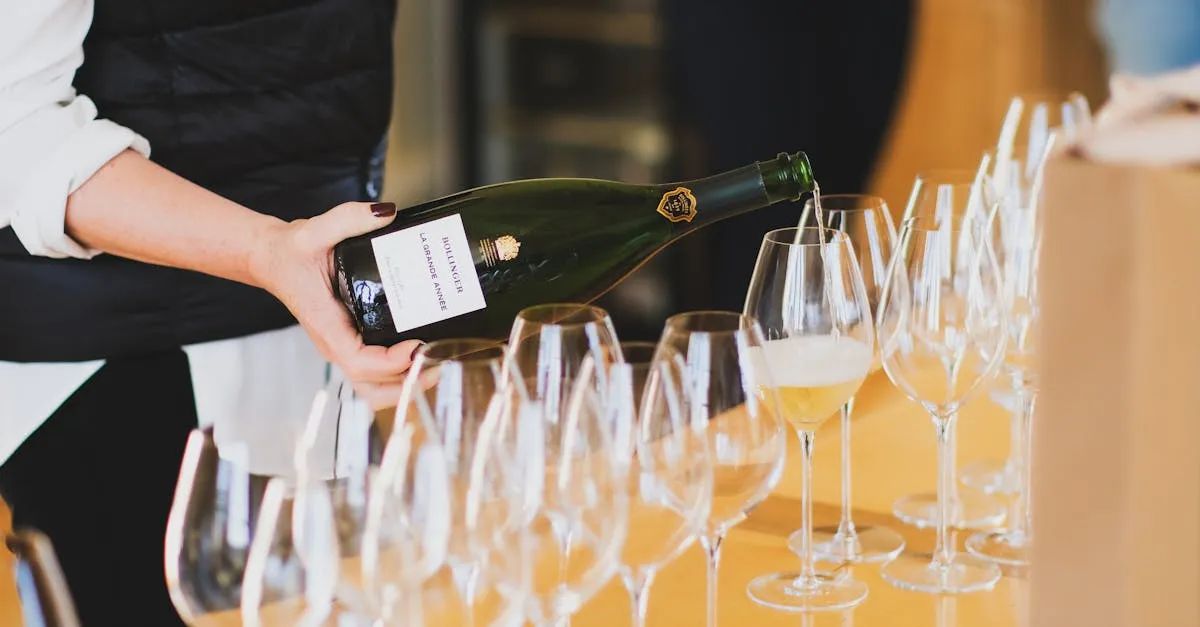
The bubbles in sparkling wines come from dissolved CO₂. Cheap fizz is made by pumping in CO₂; every premium sparkling wine uses the CO₂ naturally produced by a second fermentation. The choice between doing that second fermentation in a bottle (traditional method) or a tank (tank method) is the single biggest decision a sparkling-wine producer makes.
By the end of this section you will be able to:
- Describe how a base wine is made and why it is typically dry, high-acid, and low-alcohol.
- Walk through the traditional method end to end (second fermentation, lees ageing/autolysis, riddling, disgorgement, dosage).
- Describe Champagne AOC and Cava as traditional-method wines.
- Walk through the tank method and the Asti variation.
- Describe Prosecco DOC and Asti DOCG as tank-method wines.
- Read dosage terms (Brut, Demi-Sec).
The base wine
Nearly every style of sparkling wine starts with a base wine. The base wine is typically dry, high in acidity, and low in alcohol. It is usually a blend of different wines - from different vintages, varieties, and/or villages.
Second fermentation
The CO₂ that makes the bubbles is a by-product of a second fermentation. Sugar and yeast are added to the dry base wine; the yeast convert the sugar into alcohol and CO₂, raising the abv by around 1.5%. To stop the CO₂ from escaping, the second fermentation must take place in a sealed vessel:
- Bottle fermentation: sealed bottle.
- Tank fermentation: sealed tank.
Style, regional tradition, and regulation all influence the choice.
The traditional method (bottle fermentation)
The traditional method is the most common and highly regarded form of bottle fermentation. Used worldwide but most famously for Champagne and Cava. Wines labelled Traditional Method or Méthode traditionnelle are made this way.
The process:
- Sugar and yeast are added to the base wine, which is bottled and sealed with a crown cap.
- The second fermentation takes place inside the bottle; CO₂ dissolves into the wine, creating bubbles.
- After fermentation, dead yeast forms a sediment called lees. Over time the lees break down - yeast autolysis - imparting biscuit and bread flavours to the wine. The longer the lees contact, the more intense the autolytic character.
- Riddling: the bottle is moved very slowly from horizontal to inverted vertical, sliding the lees into the neck. Traditionally done by hand, now mostly automated using a gyropalette.
- Disgorgement: the neck is frozen, the crown cap is removed, and the pressure inside the bottle forces the plug of frozen wine and lees out.
- Dosage: the bottle is topped up with the liqueur d'expédition - a mixture of wine and usually sugar. The amount of sugar determines the final sweetness. The bottle is then resealed with a thick cork and a wire cage.
- Brut
- A very small amount of sugar is added during dosage, but the wine tastes dry thanks to the high acidity and lively bubbles.
- Demi-Sec
- Indicates medium sweetness: the liqueur d'expédition contains more sugar.
Champagne AOC
A famous traditional-method sparkling wine from northern France. Cool climate - ideal for a base wine with low alcohol and high acidity. The base wine is typically a blend of three varieties: Chardonnay, Pinot Noir, and Meunier.
For consistency, most Champagnes are a blend of base wines from several vintages - labelled non-vintage. The least expensive Champagnes spend the legal minimum 12 months on lees - dry, high-acid, apple, light autolytic flavours. More interesting wines use riper grapes and age longer on lees: complex apple, citrus (lemon), and toasted bread and biscuit from autolysis.
Vintage Champagne: in exceptional years, a portion of the best grapes goes into a single-vintage Champagne. Aged on lees for a long period, then given extended bottle ageing after disgorgement. Combines pronounced apple and citrus with nuts and honey from bottle age. Small quantities, high prices.
Champagne is one of a few EU wines exempt from labelling its PDO status - you will never see Appellation Champagne Contrôlée on a Champagne label. Cava is the other notable exempt wine.
Cava
Cava is the Spanish term for a traditional-method sparkling wine produced in certain regions of Spain. The vast majority of Cava comes from the Catalunya region. Grape varieties are mainly local Spanish varieties, though Chardonnay and Pinot Noir are also permitted and add fruit flavours and acidity to the base wine.
Catalunya's warm climate means grapes may need to be harvested early to retain high acidity. The base wine typically has light apple and pear. Most Cava is aged on lees for a shorter period than Champagne, giving subtle autolytic character. Dominated by a small number of large brands producing high-volume non-vintage wines, but many smaller producers make very good Cavas with extended lees ageing.
New World traditional-method sparkling
South Africa, California, Australia, and New Zealand all have important traditional-method producers. The coolest regions produce the highest quality. Many use the Champagne varieties (Chardonnay, Pinot Noir). Best examples are intense and complex with a long finish, typically with slightly riper fruit than Champagne thanks to more sunlight and warmth.
In South Africa, Méthode Cap Classique is the labelling term for traditional-method sparkling wine - sometimes made from the Champagne grapes, sometimes from others like Chenin Blanc.
The tank method
The tank method is used when the winemaker does not want to add autolytic flavours - typically because the base wine is made from aromatic grapes. The process:
- The base wine goes into a sealed tank along with yeast and sugar.
- The second fermentation takes place in the tank, creating bubbles.
- The lees are removed by filtration.
- The wine is bottled under pressure and sealed with a thick cork and wire cage.
The result tastes predominantly of the base wine, without autolytic character. Significantly less expensive and labour-intensive than bottle fermentation.
The Asti method
A variation on the tank method used to make sweet, low-alcohol sparkling wines. Commonly referred to as the Asti method because it's used for Asti DOCG in Piemonte.
Unlike the standard tank method, the Asti method does not begin with a dry base wine. Instead, juice goes into a pressurised tank with yeast and begins fermenting. At first the CO₂ is allowed to escape. Part-way through, the tank is sealed so the CO₂ is retained. Fermentation is stopped by filtering out the yeast before all the sugar is converted to alcohol. Result: low alcohol, sweet, sparkling.
Tank-method wines
- Prosecco DOC
- Sparkling wine from north-east Italy, typically made using the tank method. Base wine from the Glera grape - a white variety producing light- to medium-bodied wines with light apple and melon flavours. Prosecco DOC is typically dry or off-dry.
- Asti DOCG
- Sweet, fruity, light-bodied wine from Piemonte. Made with the Moscato (Muscat) grape, giving pronounced floral aromas (blossom) and flavours of grapes, peaches, and pears. Usually fully sparkling.
Tank-fermented sparkling wines are produced worldwide. A popular trend: fully or lightly sparkling wines from Moscato/Muscat - typically sweet and low-alcohol, made by the Asti method.
Section summary
- Base wine: dry, high acid, low alcohol. Usually a blend of vintages/varieties/villages.
- Second fermentation with added sugar and yeast. Must happen in sealed bottle or tank to trap CO₂. Adds ~1.5% abv.
- Traditional method (Champagne, Cava): second fermentation in bottle. Lees ageing → autolysis → biscuit and bread. Then riddling, disgorgement, dosage.
- Dosage: Brut = dry. Demi-Sec = medium.
- Champagne AOC: cool northern France. Chardonnay, Pinot Noir, Meunier. Non-vintage is the norm; Vintage in exceptional years with longer lees + bottle ageing develops nuts and honey. No PDO term on label.
- Cava: Spanish traditional-method, mostly Catalunya. Mainly local varieties; Chardonnay and Pinot Noir permitted. Less lees ageing than Champagne.
- New World traditional-method: cool regions, Champagne grapes, riper fruit. South Africa labels this Méthode Cap Classique.
- Tank method: base wine + sugar + yeast in sealed tank. No autolytic character. Used for aromatic varieties.
- Prosecco DOC: Glera, north-east Italy, dry or off-dry. Tank method.
- Asti method: juice ferments directly; fermentation stopped early by filtering yeast. Low-alcohol sweet sparkling. Asti DOCG uses Moscato.
Last sub-section: fortified wines, Sherry and Port.
✓
Test yourself to continue
Sparkling wines